Taking Flight: How Drone Technology is Revolutionizing Agriculture
Jan 8,2024
11:00 AM
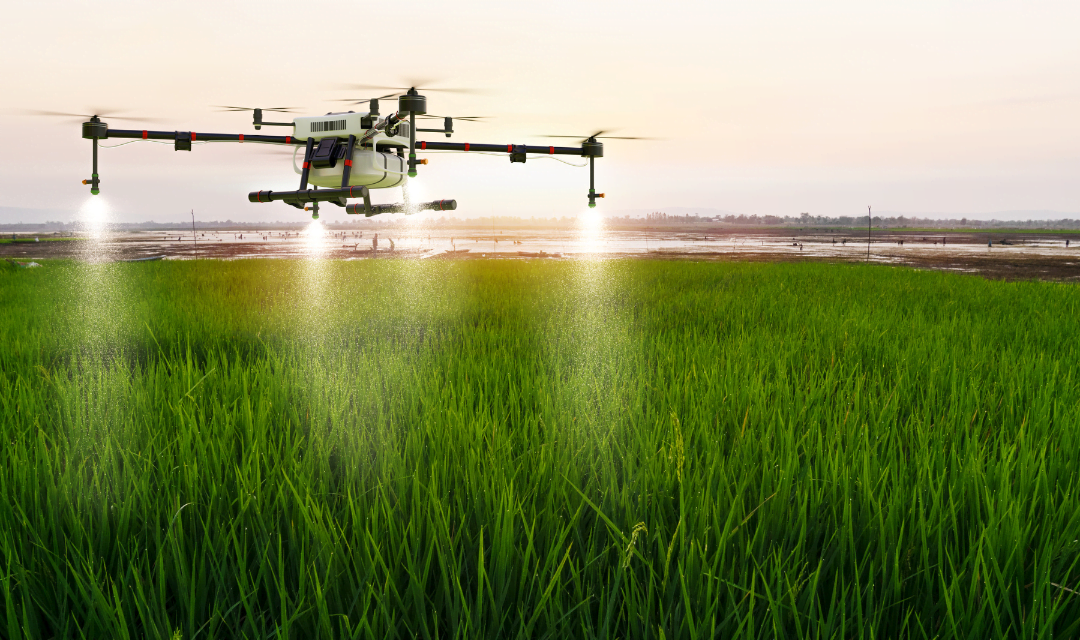
In recent years, advancements in technology have brought about transformative changes in various industries, and agriculture is no exception. One of the most groundbreaking innovations revolutionizing modern farming practices is the use of drone technology. Drones, also known as unmanned aerial vehicles (UAVs), have emerged as powerful tools in agriculture, offering farmers new capabilities to monitor crops, optimize resource management, and increase yields. In this blog, we will explore the role of drone technology in agriculture and how it is reshaping the future of farming.
Enhanced Crop Monitoring:
One of the key benefits of drone technology in agriculture is its ability to provide real-time, high-resolution imagery of crop fields. Equipped with cameras and sensors, drones can capture detailed aerial photographs and multispectral images of crops, allowing farmers to monitor crop health, identify pest infestations, and detect signs of stress or disease early on. This enables farmers to take timely corrective actions, such as targeted pesticide applications or irrigation adjustments, to mitigate potential crop losses and optimize yields.
Precision Agriculture:
Drones play a crucial role in precision agriculture by enabling farmers to apply inputs such as fertilizers, pesticides, and water with unparalleled precision. By analyzing data collected from drone-mounted sensors, farmers can create detailed maps of their fields, highlighting variations in soil moisture levels, nutrient concentrations, and crop health. This information allows farmers to customize their farming practices on a per-plant or per-acre basis, optimizing resource allocation and minimizing waste. As a result, farmers can achieve higher crop yields, lower input costs, and reduced environmental impact.
Crop Scouting and Mapping:
Traditionally, crop scouting and mapping required farmers to manually survey their fields on foot or using ground-based vehicles, which was time-consuming and labor-intensive. With drones, farmers can conduct comprehensive aerial surveys of their fields in a fraction of the time, covering large areas quickly and efficiently. Drones can create detailed 3D maps and elevation models of fields, enabling farmers to identify topographical features, drainage patterns, and areas of erosion. This information is invaluable for planning field operations, optimizing drainage systems, and implementing soil conservation measures.
Emerging Applications:
Beyond crop monitoring and precision agriculture, drone technology is opening up new possibilities for innovation in agriculture. Drones equipped with specialized sensors can analyze plant health, measure crop height, and assess vegetation density with unprecedented accuracy. This data can be used to optimize planting densities, evaluate crop performance, and predict yields more accurately. Additionally, drones can be used for tasks such as crop pollination, seed dispersal, and even crop spraying in hard-to-reach or hazardous areas.
Challenges and Considerations:
While drone technology holds tremendous potential for revolutionizing agriculture, there are still challenges and considerations that need to be addressed. These include regulatory restrictions, privacy concerns, data security issues, and the need for training and expertise in drone operation and data analysis. Furthermore, the upfront costs of drone technology and the integration of drone-derived data into existing farm management systems may pose barriers to adoption for some farmers.
In conclusion, drone technology is transforming agriculture by providing farmers with new tools and capabilities to monitor crops, optimize resource management, and increase yields. From enhanced crop monitoring and precision agriculture to crop scouting and mapping, drones are revolutionizing how farmers approach farming practices. As technology continues to evolve and adoption rates increase, the potential benefits of drone technology in agriculture are boundless, promising a more sustainable, efficient, and productive future for the farming industry.